



A Unified Measure of Workplace Performance
The InnerSpace Building Performance Index (IBPI) is a comprehensive, data-driven framework designed to evaluate how effectively a workplace supports organizational performance.
By translating complex behavioral, spatial, and economic signals into a single standardized score, IBPI gives organizations a clear and actionable understanding of workplace performance across their real estate portfolio.
Why IBPI Matters
Modern workplace strategies are increasingly shaped by data, but many organizations still struggle to translate raw occupancy and utilization metrics into meaningful business decisions. Hybrid work, evolving employee expectations, and rising real estate costs have created a more dynamic and complex work environment - one where traditional metrics alone no longer provide enough clarity.
Organizations need a way to understand not just whether space is being used, but how effectively it supports operational goals, employee experience, and portfolio efficiency. The InnerSpace Building Performance Index was developed to address this challenge by bringing together multiple dimensions of workplace performance into a single, balanced framework that provides a clearer picture of how buildings are truly performing.
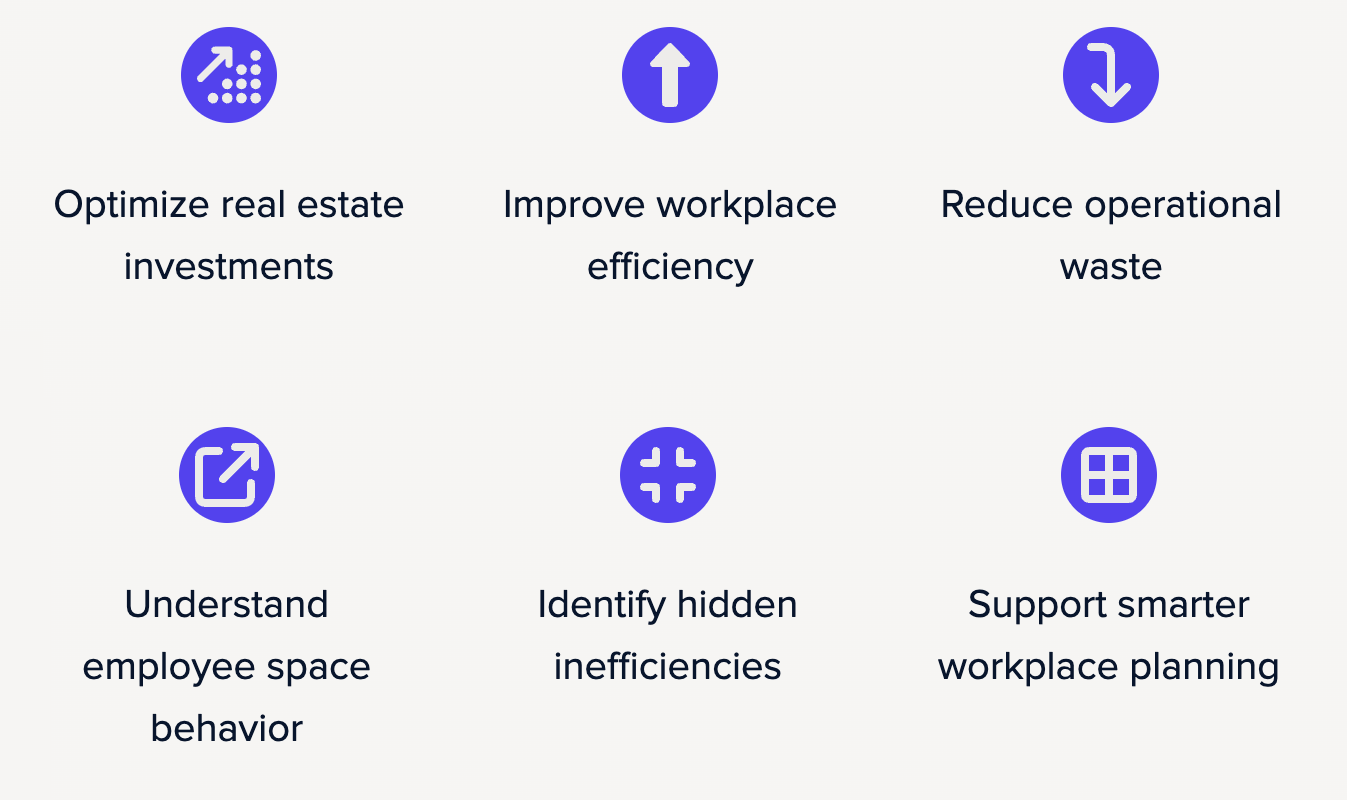
The IBPI helps organizations:
How the IBPI Works
The IBPI is designed to simplify complex workplace data into a practical and actionable performance score.Rather that relying on a single metric like occupancy or desk utilization, the framework evaluates workplace performance across multiple interconnected dimensions that collectively shape how effective a building is. This multi-factor approach helps organizations identify hidden inefficiencies that may otherwise be overlooked when reviewing metrics in isolation.
By balancing economic, behavioral and operational indicators, the IBPI creates a more holistic view of workplace health and allows organizations to compare performance consistently across buildings, floors, and regions within their portfolio.
The IBPI evaluates workplace performance across four equally weighted pillars:
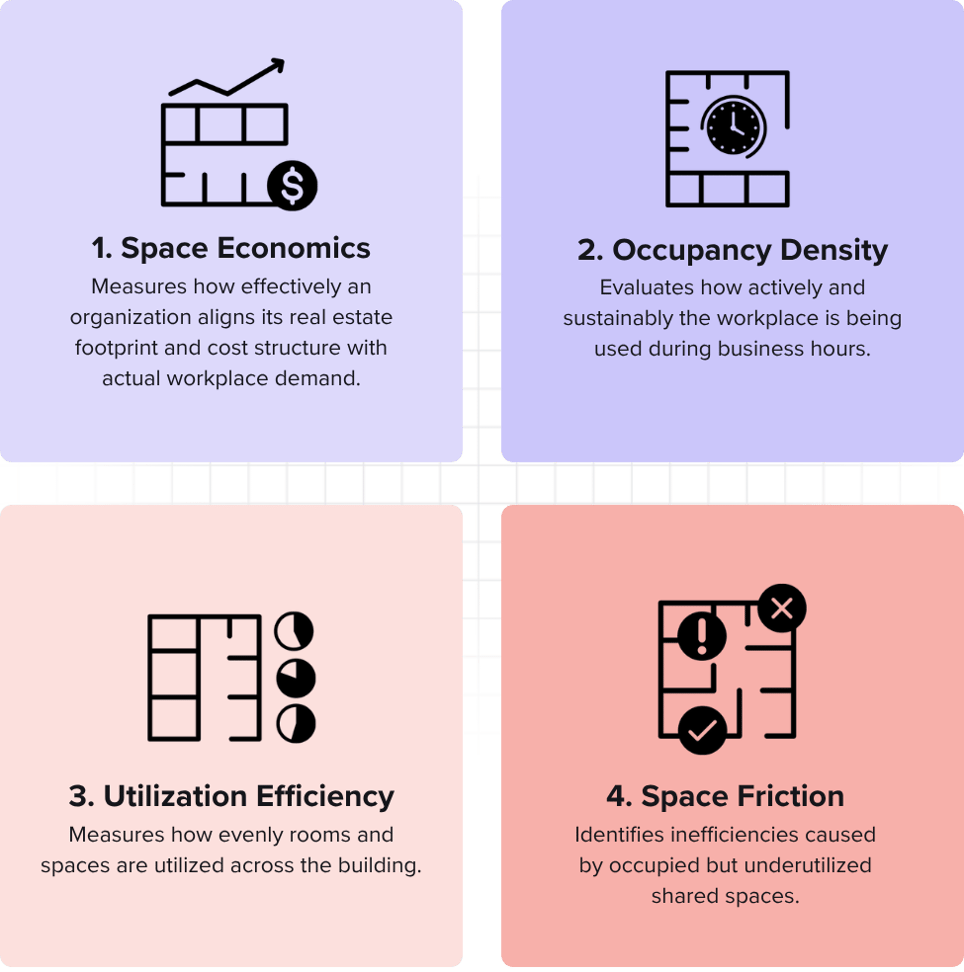
Each pillar contributes up to 25 points toward a total score out of 100.
This balanced approach ensures that strong performance in one area cannot mask inefficiencies in another.
Understanding the Score
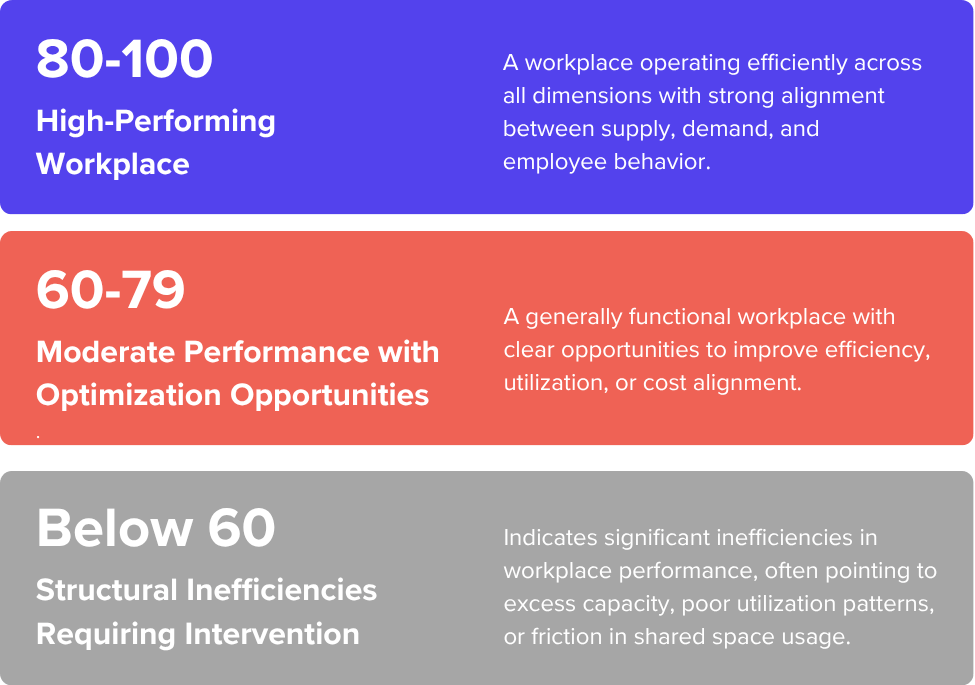
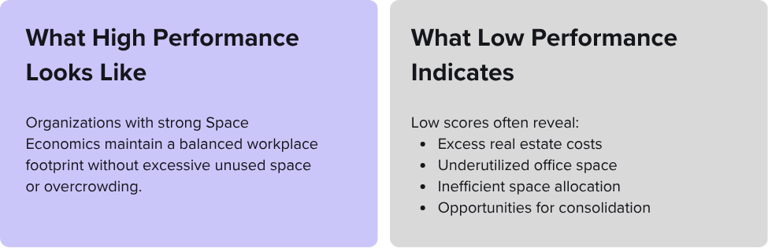
High performing workplaces typically demonstrate strong alignment between employee behavior, workplace demand, and space allocation, while lower performing environments often reveal operational inefficiencies, excess capacity, or friction in how employees access and use shared spaces. By Translating work complexity into a benchmarkable score, organizations can prioritize investments, support portfolio planning decisions, and track improvements over time.
The Ranges and What They Indicate
The Four Pillars of Performance
Workplace performance cannot be measured through a single lens. A building may appear highly occupied while still operating inefficiently. A building may have a strong economic performance while creating friction that negatively impacts employee experience.
To provide a more balanced and accurate understanding of workplace effectiveness, the IBPI evaluates performance across four core pillars.
1. Space Economics
Align Real Estate Cost with Workplace Demand
Space Economics evaluates whether the amount of space provided - and the cost associated with it, appropriately reflects actual workplace usage.
This pillar balances two key dimensions:
- Space allocated per active user
- Cost efficiency relative to capacity
Key Metrics
- Average square feet per person
- Cost ratio (cost per active user vs. cost per seat)
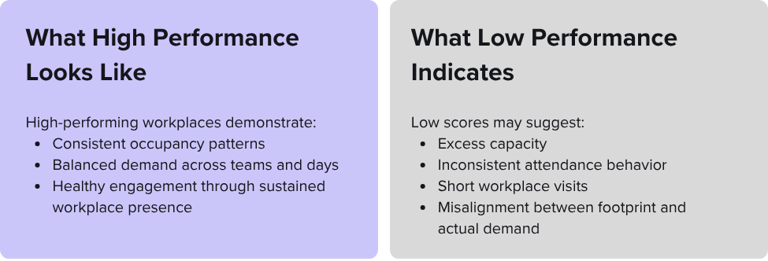
2. Occupancy Density
Measure Sustainable Workplace Activity
Occupancy Density evaluates how effectively the workplace is being used relative to available capacity.
It measures three critical behavioral indicators:
- Average business-hours occupancy
- Peak occupancy demand
- Median time spent on site
The framework is optimized around balanced occupancy levels that support both collaboration and employee experience.
Key Metrics
- Business-hours average occupancy
- Average daily peak occupancy
- Median time on site
3. Utilization Efficiency
Reveal Hidden Excess Capacity
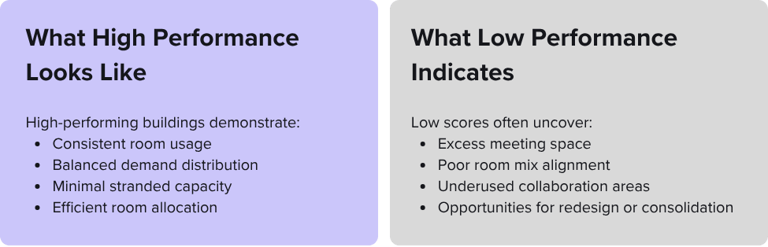
Utilization Efficiency measures how evenly rooms are being used across the workplace. A building may appear busy overall while still carrying a large number of lightly used rooms. This pillar identifies those hidden inefficiencies.
Key Metric
- Percentage of rooms under 20% utilization
4. Space Friction
Understand Shared Space Inefficiency
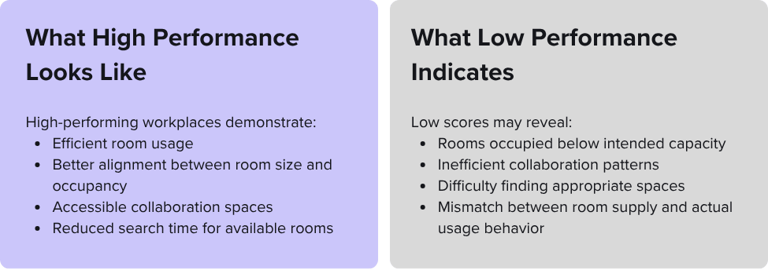
Space Friction measures how often employees encounter inefficient access to workspace because rooms are occupied but not meaningfully full.
This pillar evaluates:
- How frequently rooms are used
- How closely occupancy aligns with intended room capacity
Together, these metrics reveal whether collaboration spaces are functioning efficiently or creating hidden constraints.
Key Metric
- Mean Space Friction Index
Together, these pillars capture the relationship between cost, behavior,demand, and operational efficiency - creating a more complete view of how well a workplace supports both organizational objectives and the people using it every day.
A Holistic View of Workplace Performance
Enterprise workplaces are becoming increasingly dynamic, making it more important than ever for organizations to evaluate workplace performance through a comprehensive and connected lens.
The InnerSpace Building Performance Index provides organizations with a practical, standardized way to measure workplace effectiveness.
By combining economic efficiency, occupancy behavior, utilization insights, and space friction analysis into one unified score, IBPI enables smarter workplace decisions backed by real operational data.
Organizations can use IBPI to:
- Improve workplace strategy
- Benchmark building performance
- Support portfolio planning
- Optimize hybrid work environments
- Reduce unnecessary real estate costs
- Enhance employee workplace experience