


What NASA's Orion Capsule Can Teach Us About Designing Better Workplaces
The latest generation of spacecraft developed for NASA's Artemis program offers a fascinating lesson in workplace design. While the Orion capsule was built to carry astronauts around the Moon rather than employees through a typical workday, the principles that guided its development have remarkable relevance for today's workplace leaders. At its core, Orion represents one of the most carefully designed work environments ever created, with every element engineered around the needs of the people who will use it.
The history of human spaceflight has always been closely tied to workplace design. Early spacecraft such as the Mercury capsules were built around a single astronaut performing highly structured tasks in a very constrained environment. As missions became longer and more complex through the Gemini, Apollo, Space Shuttle, and International Space Station programs, designers gained a deeper understanding of how environments affect human performance. Engineers learned that technical functionality alone was not enough. Comfort, usability, accessibility, and cognitive workload all played a significant role in mission success.
These lessons became particularly important during the development of Orion. Orion was designed to support missions lasting up to 21 days while accommodating four astronauts with a wide range of body sizes and operational responsibilities. With only 330 cubic feet of habitable space, approximately the size of two minivans, Orion demonstrates how thoughtful design can transform even the most constrained environment into a highly functional workplace for four crew members. The capsule balances traditional physical controls with advanced digital displays while providing a functional living and working environment inside a highly constrained volume.
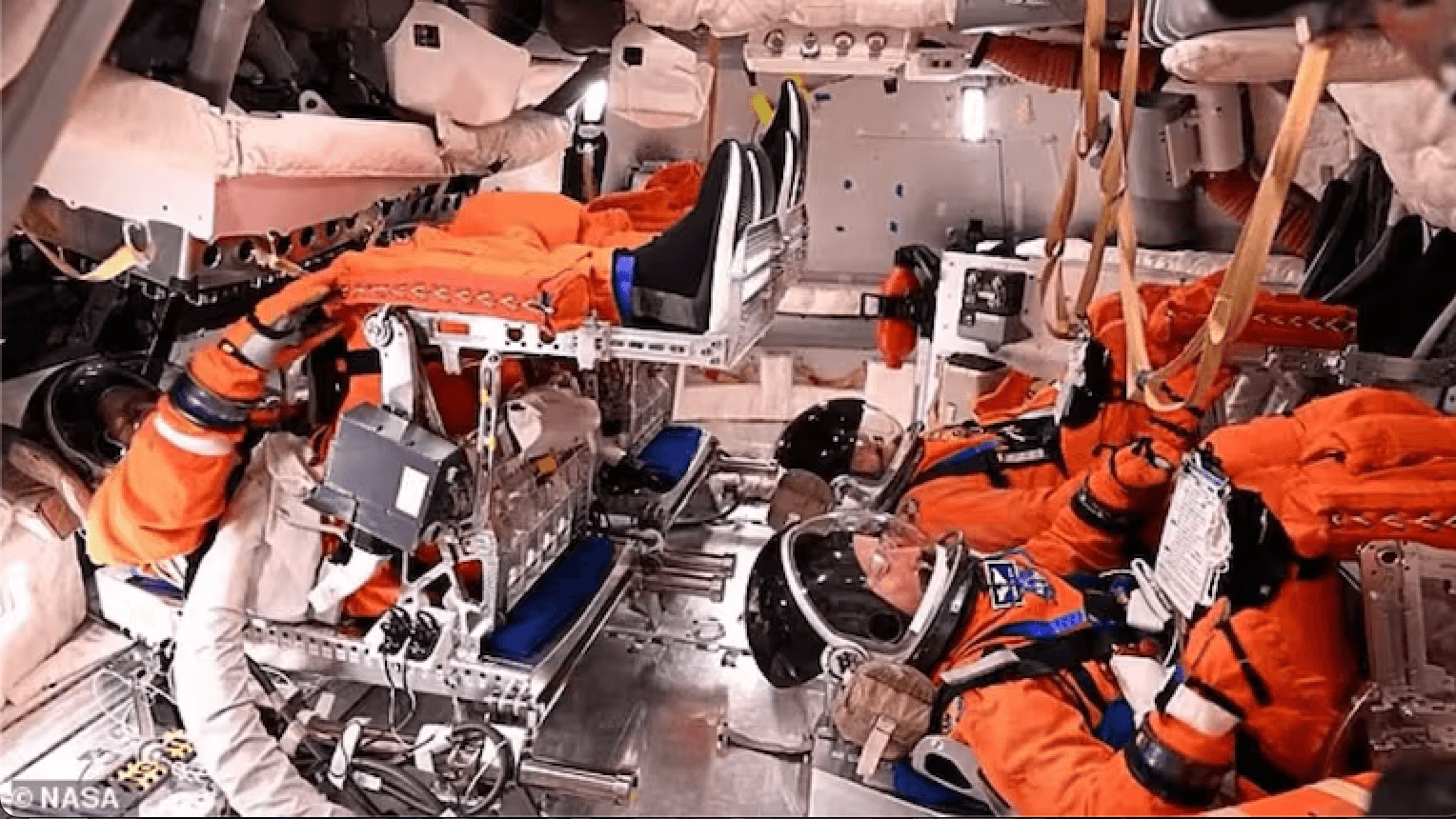
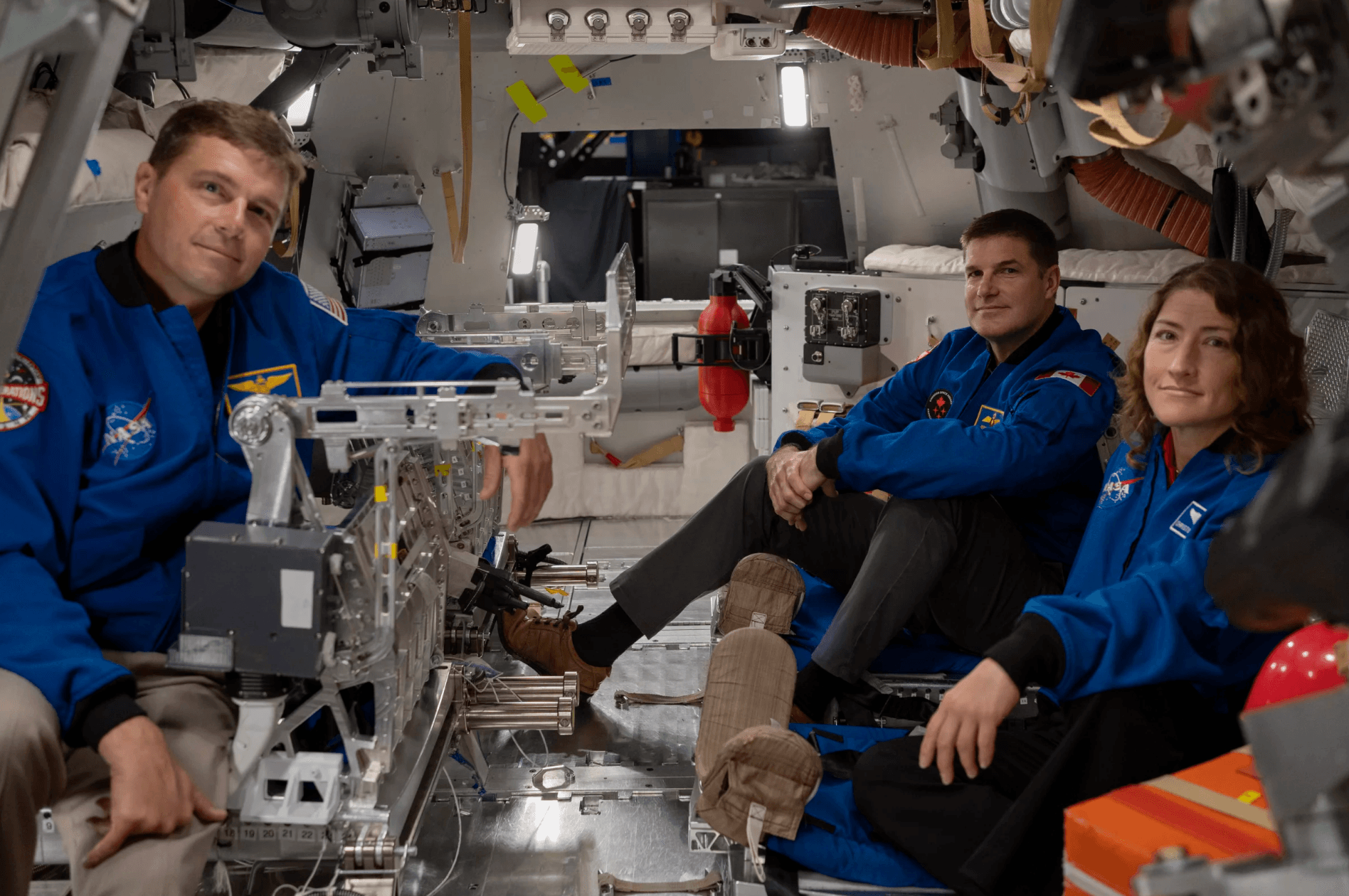
What makes Orion particularly interesting from a workplace perspective is the role astronauts themselves play in the design process. Rather than simply receiving a finished product, astronauts actively participate in testing, simulation exercises, usability reviews, and design feedback sessions. NASA engineers work closely with crew members to understand how people interact with controls, displays, storage systems, workstations, and living spaces. This process creates a continuous cycle of learning and improvement where real user experiences directly influence future design decisions.
Don’t Just Count People, Make People Count
Julie Kramer White, who served as Orion's chief engineer and Jason Hutt, who served as Orion's Crew Systems Integration Manager, were heavily involved in ensuring the spacecraft was designed around the needs of the crew. This approach reflects a broader philosophy that has become increasingly important across NASA programs. The people who perform the work are often the best source of information about how a space should function.
Modern workplace leaders face a similar challenge.
Organizations invest millions of dollars in office space, workplace technology, furniture, amenities, and employee experience initiatives. Despite these investments, many workplaces continue to be designed around assumptions rather than evidence. Decisions are often influenced by trends, executive preferences, or generalized industry recommendations rather than a detailed understanding of how employees actually use space.
NASA's approach demonstrates a different way of thinking. The design process begins with a clear understanding of the work that needs to be performed and the people performing it. Every design decision is evaluated against its ability to support mission objectives. Every square inch of space must contribute value.
The same philosophy should apply to corporate workplaces.
Real estate remains one of the largest expenses for most organizations. Every square foot carries a cost. Every meeting room, collaboration area, workstation, focus space, and amenity occupies valuable space that should contribute to organizational performance. When spaces are not aligned with employee needs, organizations often experience lower utilization, reduced workplace effectiveness, and missed opportunities to improve employee experience.
Behavioral Data: The Missing Layer in Workplace Design
One of the most important lessons from Orion is that effective workplace design requires more than simply collecting opinions. NASA gathers extensive feedback from astronauts, but that feedback is combined with observation, testing, simulation, and performance data.
Engineers do not rely solely on what astronauts say they need. They also examine how astronauts behave within the environment and how those behaviors influence outcomes.
This distinction has important implications for workplace strategy.
Employee surveys provide valuable insights into sentiment and perception, but they often tell only part of the story. Employees may express a desire for more meeting rooms while existing rooms remain underutilized. They may request additional collaboration spaces while preferring to work in informal gathering areas. Leaders may assume certain amenities are highly valued because they generate positive reactions, even though actual usage remains low.
Behavioral data helps close this gap.
Understanding how people actually interact with workplace environments provides a much richer picture of workplace performance. Data on utilization, movement patterns, dwell time, collaboration activity, and space adoption helps organizations understand whether spaces are fulfilling their intended purpose.
Consider the way NASA evaluates the interior of a spacecraft. Every workstation is assessed based on how effectively it supports critical tasks. Storage systems are designed around actual usage patterns. Displays are positioned based on visibility, accessibility, and cognitive workload considerations. The objective is not simply to fill space. The objective is to support performance.
Corporate workplaces should be evaluated using the same mindset.
Meeting rooms should be measured against their actual usage and effectiveness. Informal collaboration spaces should be assessed based on how employees interact within them. Amenities should be evaluated based on adoption and contribution to employee experience. Focus spaces should support concentrated work rather than merely exist as a design feature.
Organizations increasingly have access to the workplace intelligence needed to conduct these evaluations. InnerSpace provides visibility into how employees use space throughout the workday. Rather than relying solely on occupancy counts, workplace leaders can understand patterns of movement, collaboration, utilization, and engagement across their portfolio.
This level of insight enables a much more intentional approach to workplace design.
A meeting room that consistently hosts two people despite being designed for ten may represent an opportunity for reconfiguration. An informal collaboration area that experiences high levels of activity may warrant expansion. An amenity space with limited adoption may be better repurposed to support more valuable workplace functions.
These decisions become even more important as workplace expectations continue to evolve.
Workplaces Leaders Should Embrace Continuous Improvement
Hybrid work has fundamentally changed how employees interact with office environments. The office is no longer simply a place where people complete individual tasks. Increasingly, it serves as a destination for collaboration, connection, learning, mentoring, and innovation. As these functions evolve, workplace environments must evolve alongside them.
NASA has long embraced the principle of continuous improvement. Every mission generates new insights. Every crew provides new feedback. Every experience contributes to future design enhancements. The Orion capsule itself represents decades of accumulated learning from previous spaceflight programs.
The most effective workplace leaders adopt a similar mindset.
Workplace design should not be viewed as a one-time project. Employee behaviors change. Business priorities evolve. New technologies emerge. Space requirements shift. Organizations that continuously evaluate workplace performance are better positioned to adapt and improve over time.
This is where workplace intelligence becomes particularly valuable. Behavioral analytics, and ongoing workplace measurement provide the evidence needed to guide continuous optimization efforts. Instead of relying on assumptions, leaders can make informed decisions based on actual workplace performance.
Design For How Humans Actually Use Spaces
The broader lesson from Orion is ultimately a human one. The spacecraft was not designed around technology. It was designed around people using technology to accomplish important work. Every decision reflects an understanding that environments influence behavior, performance, comfort, and outcomes.
The same principle applies to every workplace.
Organizations that understand how people work, how they interact with space, and what environments best support their objectives will create workplaces that deliver greater value for both employees and the business. By combining thoughtful design with real workplace intelligence, leaders can ensure that every square foot serves a purpose and every space contributes to organizational success.
In many ways, the future of workplace design will look increasingly like the design philosophy behind Orion. It will be evidence-based, human-centered, continuously optimized, and deeply focused on enabling people to perform at their best. Whether designing a spacecraft destined for lunar orbit or a workplace designed to support thousands of employees, the underlying principle remains the same: great environments are built around the people who use them.
About James Wu
James Wu is a technology leader and product design expert with over two decades of experience in user experience design, software development, and product innovation. As the Co-Founder and CEO of InnerSpace, he leads the company’s mission to transform workplace analytics through spatial intelligence, leveraging Wi-Fi-based technology for real-time space utilization insights. With a strong background in product development and engineering, he actively drives the strategic vision while ensuring alignment between product innovation and customer needs. His expertise spans conceptual design, interaction architecture, and usability analysis, shaping cutting-edge solutions that improve workplace efficiency and decision-making.
Before founding InnerSpace, James played a pivotal role in shaping the user experience at Kobo, where he led UX and industrial design teams, earning numerous patents and industry accolades. He has also held leadership positions at Rypple, Platform Computing, and Blast Radius, contributing to advancements in digital interfaces and human-computer interaction. With a Ph.D. in Computer Science from Queen’s University, he combines deep academic knowledge with hands-on leadership in product-driven organizations. His commitment to enhancing human experiences through technology has earned him multiple design awards and a reputation for driving innovation in the digital space.